Sunday, January 21, 2007

Sent to Coventry


DEAR Friends and Visitors

I'm presently working away from home (and PC) on a short-term contract until the end of February. Exchanging family life in rural Sussex for a Bed & Breakfast in the industrial West Midlands four nights a week is not without its compensations, though: material is accumulating for a return to active blogging in March. Meanwhile, my sincere thanks to wellwishers, friends and visitors, and apologies for the enforced vacation.

Suspended amidst a riot of discontinuities, living and working in one of the most radically disrupted areas in Europe, I suppose, I find the theme recurring in my B&B reading: Francois Mauriac, Ian McEwan and Joseph Conrad so far - all informed or preoccupied by rupture at one level or another, or so it seems. Perhaps it's a symptom of projecting, monomaniacally, one's own preoccupations onto the world at large; or perhaps discontinuity, like paradox, is intrinsic to the music of life, and deafness to it is more or less equivalent to being mad.

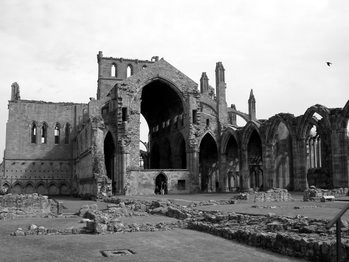
The picture? Coventry Cathedral, as re-ordered by the Luftwaffe.

With prayers and best wishes to all; see you after the motu proprio - or perhaps sooner...

Ben Donald

Sunday, December 24, 2006


R
orate caeli desuper !
Heavens distil your balmy shouris,
For now is risen the bricht day ster,
Fro the rose Mary, flour of flouris;
The clear Son, whom no cloud devouris;
Surmounting Phoebus in the east,
Is comen of his heavenly touris;
Et nobis Puer natus est.

Archangellis, angellis, and dompnationis;
Tronis, potestatis, and martyris seir,
And all ye heavenly operationis,
Star, planet, firmament, and sphere,
Fire, erd, air, and water clear,
To him give loving, most and least,
That come in-to so meek manner;
Et nobis Puer natus est.

Sinneris be glaid, and penance do,
And thank your Maker hairtfully;
For he that ye micht nocht come to,
To you is comen full humyly,
Your saulis with his blude to buy,
And loose you of the Fiendis arrest,
And only of his awn mercy;
Pro nobis Puer natus est.

All clergy do to him incline,
And bow unto that bairn bening,
And do your observance divine
To him that is of kingis King;
Ensence his altar, read, and sing
In haly kirk, with mind degest,
Him honouring attour all thing,
Qui nobis Puer natus est.

Celestial fowlis in the air,
Sing with your notis upon hicht;
In firthis and in forestis fair
Be mirthful now, at all your micht,
For passit is your dully nicht;
Aurora has the cloudis pierc'd,
The sun is risen with glaidsome licht,
Et nobis Puer natus est.

Now spring up flouris fra the root,
Revert you upward naturally,
In honour of the blissit fruit
That raise up fro the rose Mary;
Lay out your leaves lustily,
Fro deid tak life now at the lest
In worship of that Prince worthy,
Qui nobis Puer natus est.

Sing heaven imperial, most of hicht,
Regions of air mak harmony;
All fish in flood and fowl of flicht,
Be mirthful and mak melody:
All GLORIA IN EXCELSIS Cry,
Heaven, erd, sea, man, bird, and beast,
He that is crownit abune the sky
Pro nobis Puer natus est.

William Dunbar OFM (1460-1530)

Wishing a very happy and holy Christmas to all visitors and friends of the Undercroft. Apologies for the light posting schedule of late; I expect things to pick up in the New Year.

In Christo Domino

Ben Donald

Thursday, December 14, 2006

Here's tae us!

HOME, CIRCA 1960

"WHO, THAT HAS a feeling for warfare, would fight with a Scotchman? Such a one, I hope, does not breathe; the plain fact being that if a Scot beats you, he beats you; whereas if you begin to beat a Scot he will assuredly bawl, in the King's name, for the law. “Hech, sirs, rin for the polis. A'hm gettin' whupped!” Let us therefore continue our discourse amicably.

Your proper child of Caledonia believes in his rickety bones that he is the salt of the earth. Prompted by a glozing pride, not to say by a black and consuming avarice, he has proclaimed his saltiness from the house-tops in and out of season, unblushingly, assiduously, and with results which have no doubt been most satisfactory from his own point of view. There is nothing creditable to the race of men, from filial piety to a pretty taste in claret, which he has not sedulously advertised as a virtue peculiar to himself. This arrogation has served him passing well. It has brought him into unrivalled esteem. He is the one species of human animal that is taken by all the world to be fifty per cent cleverer and pluckier and honester than the facts warrant. He is the daw with a peacock's tail of his own painting. He is the ass who has been at pains to cultivate the convincing roar of a lion. He is the fine gentleman whose father toils with a muck-fork. And, to have done with parable, he is the bandy-legged lout from Tullietudlescleugh, who, after a childhood of intimacy with the cesspool and the crablouse, and twelve months at “the college” on moneys wrung from the diet of his family, drops his threadbare kilt and comes south in a slop suit to instruct the English in the arts of civilization and in the English language. And because he is Scotch and the Scotch superstition is heavy on our Southern lands, England will forthwith give him a chance, for an English chance is his birthright. Soon, forby, shall he be living in “chambers” and writing idiot books. Or he shall swell and hector and fume in the sub-editor's room of a halfpenny paper. Or a pompous and gravel-blind city house shall grapple him to its soul in the capacity of con-fidential clerk. Or he shall be cashier in a jam factory, or “boo and boo” behind a mercer's counter, or “wait on” in a coffee tavern, or, for that matter, soak away his chapped spirit in the four-ale bars off Fleet Street."

TWH Crosland – from The Unspeakable Scot (1902)

Monday, December 11, 2006

More Hermeneutico-whatsit


A SLIGHT and rather querulous post of mine last week provided the thin compost from which a truly illuminating crop of comments sprang up. I am deeply grateful to all who contributed – particularly to Daniel Mitsui for articulating so effectively his “Hermeneutic of Recovery” (to coin a phrase) to which I also subscribe, and which makes it possible for me to remain a Roman Catholic while conceding almost all of the points addressed with such devastating effectiveness by Orthodox brethren. I’m provoked to return to it today by the speculations of my friend Tony at The Muniment Room, on the reception the fabled motu proprio is likely to receive at the hands of the English (and not just the English) hierarchy – of which more subsequently.

This whole “Hermeneutic of XYZ” business originates, of course, with that famous address the Holy Father gave to the Roman Curia almost exactly a year ago (I say “famous” in the sense that every Catholic blogger of traditionalist and conservative stripe has been over it with a toothcomb in the intervening year; beyond this and its immediate audience, I suspect it might as well have been played on a dog-whistle). It has been adopted as a kind of “mission statement” by conservative Catholics, something that provides both a key to the upheavals of the recent past, and a modus operandi for the future.

But does it? Almost every post on this blog that deals directly with the crisis in the Church is an exercise in elaborating a single idea – that Catholic belief and Catholic practice have become dangerously bifurcated as a consequence of an unbalanced ecclesiology, the origins of which are to be sought far further back than the Second Vatican Council. The hermeneutic of Continuity sets out to draw things back together by insisting that they were never legitimately loosened, far less separated, in the first place: that the discontinuities actually experienced by real live Catholics – those who approved, those who disapproved and the majority who remain absolutely indifferent because they "follow the Pope" – are the consequence of misunderstandings, misinterpretations, misapplications. In other words, another theoretical apparatus is proposed, to cover practical discontinuities that remain self-evident nevertheless to very nearly every adult in every diocese of the Catholic world.

To return to the burden of Tony’s post, then: this “Hermeneutic of Continuity” - can you touch it? Can you smell it? Can you sing or pray it? Can you make an icon of it? Will it lodge in the imagination of a five-year-old? Will it enable her to grow up understanding why we have to drive past four Catholic churches to attend a Mass thirty miles away?

So long as the answer to any of these questions is “no”, I’m afraid it’s of absolutely no earthly use.

Saturday, December 09, 2006

Yper tou agiou Oikou

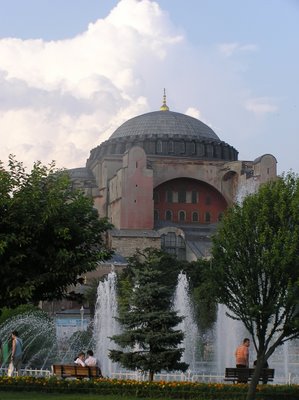
THANKS TO JOHN for this beautiful image of the Great Church, accompanying his poignant commentary on an article by Rod Dreher:

"Benedict has a clearer eye about Islam than his predecessor... [and] he is not prepared to pretend that it is of no matter that in Europe Muslims are free to worship as they please and to build mosques at will, while in Turkey and the Muslim world, Christians are generally not permitted to build churches and face state-sanctioned discrimination. It is better, says Benedict, to speak frankly about the world as it is, rather than about the world Western elites wish we lived in."
Log on to the Aghia Sophia site, to demand restitution and an end to Turkey's century-long ethnic cleansing of Christian minorities, as a precondition of EU membership talks.

Friday, December 08, 2006

In paradisum deducat te Angeli


OF YOUR CHARITY

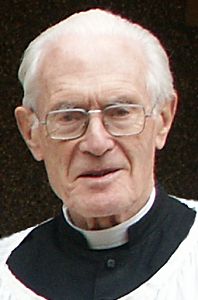
"Please pray for the soul of Fr. Michael Charles Crowdy who passed-away mid-afternoon to-day in the care of the Bevan Family in Dover.

Fr. Crowdy was born on the 21st. November 1914, a solicitor by profession; an Anglo-Catholic convert he was Oratory-trained for the priesthood in Italy.

In latter years, to all intents and purposes, he became an itinerant priest and as late as August of this year travelled on his motorcycle...some 60 miles or more to take The Mass to outlying locations. He returned the next day, fully caped, having ridden through inclement weather.

Attempts to restrain him were to no avail, both cancer and Parkinson's notwithstanding, he said his last public Mass in Taunton on All Saints Day. On one occasion he was persuaded not to travel to a Mass Centre, but it was later discovered he had taken Communion to a sick parishioner even further distant."

May his soul and souls of all the faithful departed rest in peace.

(Thanks to Sixupman for this notification)

Thursday, December 07, 2006

Respectable

MGR RONALD KNOX, somewhere, illustrates a salient difference between Protestantism and Catholicism by means of an “umbrella test”: if a man leaves an umbrella behind in a Catholic or a Methodist chapel, in which of these can he be confident of finding it, just where he left it, on the following week? We know the answer – or at least we used to: if you leave an item of property behind in a Methodist chapel, it will remain untouched until you retrieve it, except insofar as some kind soul may have set it aside for safekeeping until your return. Anything left in a Catholic Church will be nicked - full stop.

Knox’s point is also mine, and that of Arturo Vasquez; far from wringing his hands over “what this says” about the degenerate condition - as compared with their respectable counterparts in the Protestant sects - of those nurtured with the rational milk of Holy Mother Church, Knox rejoices in this certain indication of the presence of sinners within her bosom as yet further proof of the authenticity of her claims.

In Great Britain we were used to this dichotomy. Here, the Established Churches (Anglican in England, Presbyterian in Scotland), except for their more remote rural parishes, have always in modern times been identified with the middle-classes at prayer. The “Non-conformist” Protestant sects (Baptists, Methodists, Wee Frees etc) were a button down on the cuff perhaps, but still solidly bourgeois for all that. Catholics were the rabble – inbred recusant backwoodsmen, dubious bohemians and wayward aristocrats, together with the lowest of the immigrant urban poor, ten-to-a-bed in the tenements of Glasgow and Liverpool. This was one of our chief glories and, as Knox suggests, an apologetic all on its own.

Not any longer: a pincer movement of what passes for “prosperity” and the surrounding post-Protestant culture, avidly assimilated as part of the aggiornamentist project and apotheosised in smug, inverted, bourgeois liturgy, has sliced deep into the Catholic soul. Leave your umbrella in a suburban Catholic Church today (an ugly-on-purpose cinder-block affair, self-consciously tricked out in that tell-tale conjunction of low kitsch and middle-brow minimalism) and somebody in nice knitwear, wearing a strange facial expression known in Protestant circles as a SWEG (Sickly Weak Evangelical Grin) will make a point of handing it back to you. It makes me sick to my stomach.

Are “Traditionalists” immune? Not a bit of it. The dominant influence in English-speaking Traditionalism, as in English-speaking-everything-else, is American. In an astonishingly prescient piece posted at the Lion and the Cardinal, HL Menken anatomises the baneful influence of American Protestantism (a stupider, louder, more saccharine-puritanical mutation of the Anglo-German original) on US Catholic clergy two generations before Roncalli’s Folly made assimilation of it obligatory. To this, modern US Traditionalists have added their own dreary distillation of Maynooth Jansenism, so that wherever two or three are gathered together in the name of the ancient faith, the conversation is less likely to tend to the recovery of liturgical spirituality than whether or not we ought to read Dante (who condemned several Popes) or Chaucer (who wrote about toilet matters and immoral liaisons); whether or not every picture since Fra Angelico (with the exception of low charismatic kitsch) is cunningly concealed filth, the work of some unspeakable heathen degenerate; whether or not an honest wife and mother doing a bit of gardening in her jeans runs the risk of falling into trans-sexual lesbian breadwinning...

Puritanism is not Catholic. It is not even human. Prudery is not purity. Respectability is not holiness, but if anything, an actual impediment to holiness. The Church of Christ is home to saints and sinners; the merely respectable are quite welcome to shift for themselves.

Wednesday, December 06, 2006

Rover's Return

Pseudo-Iamblichus, the Thinking Man's Maverick, is back on the block following a sojourn among the Saxon; but if you think he's going to cease lobbing bricks through all the right windows, you're in for a shock.

This decision will not affect how I write nor my criticisms of Catholicism, of the Pope, or of Catholic history in general. So do not hold me accountable for being inconsistent with the ethos that dominates the Roman Catholic Church or the traditionalist movement within it. I am going back to being a plain old Roman Catholic (with heavy unorthodox Lefebvrist sympathies), and not joining the Pope Benedict XVI Fan Club nor the Church of Pope Pius XII Re-Enactment Society.

Link bar amended, Arturo.

Tuesday, December 05, 2006

Cantate Domino


PSALMODY GIVES tranquillity to souls, brings peace by mastering surging thoughts. It calms anger and represses concupiscence. Psalmody strengthens friendship, unites those who are estranged, reconciles those who are angry, for who would consider as an enemy one who united his voice with his in praise of God? Psalmody also gives the greatest of goods, charity: it unites all into one choir. It puts the devils to flight and ensures the help of angels. It is a protection against the fears of night-time, a rest in the labours of the day. It strengthens children, adorns the young, consoles the aged and beautifies women. It peoples solitude, it stills agitated assemblies. It is the voice of the Church. It gives splendour to festivals. It gives rise to the sadness which comes from God; from a heart of stone it can draw tears.

Psalmody is the occupation of the angels, it is the life of heaven, it is the spiritual sacrifice. It contains true theology: the prophesies of the Incarnation, the threats of judgement, the hope of the resurrection, the fear of punishment, the promise of glory, the revelation of mysteries – all these are gathered up in the Book of Psalms, a great treasure-house, open to all the world.

St Basil the Great - Homily on Psalm 1

Monday, December 04, 2006

Exsules filii Hevæ


N
OW THE ICE lays its smooth claws on the sill,
The sun looks from the hill
Helmed in his winter casket,
And sweeps his arctic sword across the sky.
The water at the mill
Sounds more hoarse and dull.
The miller's daughter walking by
With frozen fingers soldered to her basket
Seems to be knocking
Upon a hundred leagues of floor
With her light heels, and mocking
Percy and Douglas dead,
And Bruce on his burial bed,
Where he lies white as may
With wars and leprosy,
And all the kings before
This land was kingless,
And all the singers before
This land was songless,
This land that with its dead and living waits the Judgement Day.
But they, the powerless dead,
Listening can hear no more
Than a hard tapping on the floor
A little overhead
Of common heels that do not know
Whence they come or where they go
And are content
With their poor frozen life and shallow banishment.

Edwin Muir - Scotland's Winter

Saturday, December 02, 2006

Unam Sanctam


A
FRIEND draws my attention to the following article by an Orthodox priest:
...the Orthodox would be delighted for His Holiness of Rome, repudiating what we regard as the errors attendant on his recent understanding of his ministry, to take once again his rightful place as the ranking spiritual leader of the Orthodox Church (a position that the patriarch of Constantinople has held since the separation of Rome from Orthodoxy in the 11th century).

To Orthodox Christians, such a "solution" to the problem would seem very attractive. In fact, however, one fears that it would be no solution at all. Such a weakening of the papacy would be an utter disaster for the Roman Catholic Church as it is currently constituted. To many of us outside that institution, it appears that the single entity holding the Roman Catholic Church together right now is probably the strong and centralized office of the pope.

This sobering and, in my opinion, deadly accurate view really should send icy fingers up our collective Roman spine. At the end of a thousand years of the "Roman Adventure" the unity of the Catholic Church is reduced to a legal fiction, sleeping between the covers of the Catechism and a million parish registers; it is almost nowhere effectively operative at the level of faith and worship. Without the central-beaureaucratic Papacy it would crumble at the touch. This is not the "Oneness" of the Creed, nor of any ecclesiology worthy of the name. Historically too, it's absolutely true that once a dictatorship has been erected and citizenship defined solely in terms of obedience to it, any subsequent weakening at the centre will set in motion, ineluctably, the disintegration of the state.

Having choked off Sacred Tradition, the "living Magisterium" is itself now in retreat - leaving some, like Protestants, with scripture alone and most of the remainder prey to a kind of "magisterial fundamentalism" that reduces the content and practice of the faith to following the Pope (forgetting that a Rock ought not to be "going" anywhere).

Thursday, November 30, 2006

Turkish entry into Europe


" I
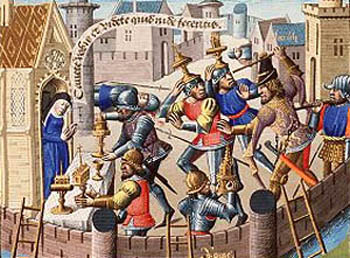
T WAS EARLY MORNING, with the waning moon high in the sky. The walls were strewn with the dead and dying; but of living defenders there was scarcely a trace. The surviving Greeks had hurried home to their families, hoping to save them from the rape and pillage that had already begun; the Venetians were making for the harbour, the Genoese for the comparative security of Galata. They found the Horn surprisingly quiet: most of the Turkish sailors had already gone ashore, lest the army beat them to the women and the plunder. The Venetian commander encountered no resistance when he set his sailors to break down the boom; his little fleet, accompanied by seven Genoese vessels and half a dozen Byzantine galleys, all packed to the gunwales with refugees, swung out into the Marmara and down the Hellespont to the open sea.

By noon the streets were running with blood. Houses were ransacked, women and children raped or impaled, churches razed, icons wrenched from their frames, books ripped from their bindings. The Imperial Palace at Blachernae was left an empty shell, the Empire's holiest icon, the Virgin Hodegetria, hacked into four pieces and destroyed. The most hideous scenes of all, however, were enacted in St Sophia. Matins were already in progress when the berserk conquerors were heard approaching. Immediately the great bronze doors were closed; but the Turks soon smashed their way in. The poorer and less attractive of the congregation were massacred on the spot; the remainder were led off to the Turkish camps to await their fate. The priests continued with the Mass until they were killed at the altar; but there are among the faithful those who still believe that one or two of them gathered up the patens and chalices and mysteriously disappeared into the southern wall of the sanctuary. There they will remain until Constantinople becomes once again a Christian city, when they will resume the service at the point at which it was interrupted.

Sultan Mehmet had promised his men the three traditional days of looting; but there were no protests when he brought it to a dose the same evening. By then there was little left to plunder, and his soldiers were fully occupied sharing out the loot and enjoying their captives. In the late afternoon, accompanied by his chief ministers, his imams and his bodyguard of janissaries, he rode slowly to St Sophia. Dismounting outside the central doors, he picked up a handful of earth which, in a gesture of humility, he sprinkled over his turban; then he entered the Great Church. As he walked towards the altar, he stopped one of his soldiers whom he saw hacking at the marble pavement looting, he told him, did not include the destruction of public buildings. At his command the senior imam mounted the pulpit and proclaimed the name of Allah, the All-Merciful and Compassionate: there was no God but God and Mohammed was his Prophet. The Sultan touched his turbaned head to the ground in prayer and thanksgiving St Sophia was now a mosque."

John Julius Norwich - A Short History of Byzantium pp. 380-1

Tuesday, November 28, 2006

The Muniment Room

A new blogger sets himself an interesting brief - how would the mainstream Catholic Media in England & Wales look if it were to rediscover its vocation? What is "critical solidarity", what would it require, and what would it feel like? This blogger aims to challenge the English Catholic media (and, by implication, the English Hierarchy) to begin engaging honestly with the Traditionalist position, as a refreshing and radical alternative to another thirty years of soul-sapping party-line platitudes. He hopes to explore ideas of how such a thing might be set in motion, akin to coaxing hardened hydrophobics back into the stream.

Good luck with that!

Friday, November 24, 2006

Domine dilexi decorum domus tuae

"THE CHURCH OF ST THOMAS AQUINAS was a massive building; its walls were plastered by deposits of soot and grease, so that their original grey was black. It stood on a kind of pimple of higher ground, and this fact occasioned little flights of stone steps and cobbled ramps, slippery and mossy under-foot; clustering at the base of the tower, they looked like household terriers running at the feet of some dangerous, dirty tramp.

The Church was in fact less than a hundred years old; it had been built when the Irish came to Fetherhoughton to work in the three cotton mills. But someone had briefed its architect to make it look as if it had always stood there. In those poor, troubled days it was an understandable wish, and the architect had a sense of history; it was a Shakespearian sense of history, with a grand contempt of the pitfalls of anachronism. Last Wednesday and the Battle of Bosworth are all one; the past is the past, and Mrs O'Toole, buried last Wednesday, is neck and neck with King Richard in the hurtle to eternity. This was - it must have been - the architect's view. From the Romans to the Hanoverians, it was all the same to him; they wore, no doubt, leather jerkins and iron crowns; they burned witches; their buildings were stone and quaint and cold, their windows were not as our windows; they slapped their thighs and said prithee. Only such a vision could have commanded into being the music-hall medievalism of St Thomas Aquinas.

The architect had begun in a vaguely Gothic way and ended with something Saxon and brutal. There was a tower at the west end, without spire or pinnacles, but furnished with battlements. The porch had stone benches, and a plain holy-water stoup, and malodorous matting that was beaten thin by scuffling feet - matting that was always sodden, and might have been composed of some thirsty vegetable matter.

The doorway had a round arch of a Norman persuasion, but no recessed arches, no little shafts, no ornament, not so much as a lozenge, a zigzag, a chevron; stern had been the mood the day that doorway was designed, and the door itself was strapped and hinged in a manner that put one in mind of siege warfare and starvation and a populace reduced to eating its rats.

Inside the church, in the pit-like gloom, there was a deep font, without ornament, with a single plain shaft, and big enough to cope with a multiple birth, or dip a sheep. There was a west gallery for the organ, with a patch of deeper blackness beneath it; the gallery itself, though you would not know until you had swum into that blackness, was reached by a low little doorway with junior siege-hinges, and a treacherous spiral staircase, with risers a foot deep. There were two side chapels, two aisles, and it was in the arcades that the architect's derangement was most evident, for the arches were round or pointed, seemingly as a consequence of some spur-of-the-moment decision, and as one blundered through the nave, the confusion of style gave the church a misleadingly heroic air, as if it had been built, like one of the great European cathedrals, in successive campaigns a hundred years apart. The shafts of the columns were squat and massive cylinders, made of a greyish, finely pitted stone, and their uncarved capitals resembled packing cases.

The lancet windows were grouped two by two, and sur-mounted by grudging tracery, here a circle, here a quatrefoil, here a dagger trefoil. In each of the lights stood a glass saint, bearing his name on an unfurling scroll, each scroll inscribed in an unreadable Germanic black-letter; the faces of these glass saints were identical, their expressions were all alike. The glass itself was of a mill-town sort; there was a light-refusing, industrial quality about its thick texture, and its colours were blatant and vile: a traffic-light green, a sugar-bag blue and the dull but acidic red of cheap strawberry jam. There were stone flags underfoot, and the long benches were varnished with a treacly red stain; the doors to the single confessional were low and latched, like the doors to a coalshed.

Father Angwin and the bishop came out through the draughty vaulted passage from the sacristy, and emerged by the Lady chapel in the north aisle. They looked about; not that it profited them. In all, St Thomas Aquinas was as dark as Notre-Dame and resembled it in one other alarming particular - that at any given moment, standing in one part, you lost all sense of what might be happening in another. You could not see the roof, although you had - in St Thomas Aquinas - an uneasy, crawling feeling about it, that it might not be so far above your head at all, and that it might lower itself a little from time to time, just that little inch or so that betrayed its ambition to unite, one winter's day, with the stone flags, and freeze into a solid block of unwrought masonry, with the worshippers between. The church's inner spaces were aggregations of darkness, with channels of thicker darkness between. There were plaster saints - which the bishop now surveyed as best he might - and before most of them, in severe iron racks that looked like the bars of a beast-house, devotional candles burned; yet it was a lightless burning, like marsh-gas, a flickering in an unfelt, breathless wind. There were draughts, it was true, which followed each worshipper like a bad reputation, which dabbed at their ankles and climbed into their clothes, as cats do with people who do not like them. But when the church was empty the draughts lay quiet, only whistling from time to time about the floor; and the candle flames rose up towards the roof, straight and thin as dressmaker's pins.

“These statues,” said the bishop. “Have you a pocket torch?” Father Angwin did not reply. “Then give me a tour,” the bishop demanded. “Start here. I cannot identify this fellow. Is he a Negro?”

Hilary MantelFludd (Viking 1989)

Tuesday, November 21, 2006

Read this


...wonderful essay.

(Picture courtesy of Rorate Caeli)

On The Farm


There was Dai Puw. He was no good.
They put him in the fields to dock swedes,
And took the knife from him, when he came home
At late evening with a grin
Like the slash of a knife on his face.

There was Llew Puw, and he was no good.
Every evening after the ploughing
With the big tractor he would sit in his chair,
And stare into the tangled fire garden,
Opening his slow lips like a snail.

There was Huw Puw, too. What shall I say?
I have heard him whistling in the hedges
On and on, as though winter
Would never again leave those fields,
And all the trees were deformed.

And lastly there was the girl:
Beauty under some spell of the beast.
Her pale face was the lantern
By which they read in life's dark book
The shrill sentence: God is love.

R.S. Thomas

Did John Paul II write "pro omnibus"?

Fr. John Zuhlsdorf @ 10:21 am

I learned about something at The Undercroft, stemming from something else at Valle Adurni ... something rather serious. I am obliged to add additional information to put things straight.

Some folks have incorrectly speculated that the late Pope John Paul II, in Ecclesia de Eucharistia, wrote "pro omnibus" instead of "pro multis"...

Read the rest here.

Monday, November 20, 2006

"Pharisaical nominalism..."


Thanks to Fr Tim Finigan

Chris Ferrara on pro multis:
The development is also important for the traditionalist cause because it demonstrates that traditionalist opposition to this erring novelty was not “private judgment,” as neo-Catholic spokesmen insisted in their Pharisaical nominalism, but a mere observation of what is self-evident: that “for many” cannot mean “for all,” and that the Church has never sanctioned such an idea concerning the fruit of the Mass. Likewise, as this development certainly highlights, the rest of the traditionalist position is nothing but a systematic statement of the obvious about recent changes in the Church. Just as it is obvious that “for all” is a mistranslation, so is it obvious that the traditional Mass was never prohibited by any papal command—a fact the Vatican itself now openly acknowledges, despite decades of neo-Catholic advice to the contrary. Also obvious is that “ecumenism” is a pastoral program that can be abandoned as a failure, not an irrevocable doctrine of the faith—a fact that one can hope will soon enough be recognized as well by the Vatican...
Here.

You had to have been there...


SEVERAL YEARS AGO BBC Scotland broadcast an hour-long programme in which three Scots clerics - a Calvinist minister, an Anglican theologian and a Cardinal - wandered around the Holy Land sharing their reflections on the life of Our Lord. The Calvinist Minister, a rare soul from the remote West Highlands, said a number of penetratingly beautiful things about Jesus; the Anglican, erudite and devout, offered a number of very interesting and orthodox insights; the Cardinal, God rest his soul, bored on almost exclusively, and to general incomprehension, about the Second Vatican Council.

Cathcon links to this priceless article, which begins as follows:

Noticing that the words “Vatican II” evoked no response in her high school students, an Irish nun recently told me she asked them what Vatican II was. After some time and with much hesitation, one of them asked: “Would that be the pope’s summer residence?”

The Central Event of Human History is receding from the consciousness of Catholics. It's not on the radar of the young. How can this possibly be happening? Sense the scandal, the wailing and gnashing of teeth. Savour it.

There's hope yet: anyone who imagines this unaccountable indifference among the young to the Second Pentecost might be reversed by earnest perusal of the memoirs of Fr Yves Congar belongs in a rubber room. But we knew that anyway.

Oh, my sides....

Sunday, November 19, 2006

The "T" word


C
ONSIDER the following heart-sinking exchange at NLM over the pro multis debacle:
If the Holy Father approves, that ought to be sufficient. Paul VI approved the existing translation, so it is valid. If Benedict XVI approves the new (and more felicitous) translation, it will be valid. Is that not after all why we have a Holy Father, that the Church may avoid the confusion arising from personal interpretation?
john m | 11.18.06 |

Does that mean that truth changes from Holy Father to Holy Father?

Rev.Hunter | 11.19.06 |


No, he's merely saying that one Pope said the one was valid; another said the other was valid. Paul VI, in confirming the validity of "for all," did not say that "pro multis" was invalid; Benedict XVI, if he prefers "pro multis," this does not imply that he thinks "for all" is invalid. There is no contradiction involved....

Pastor in Valle in the course of some very helpful sleuthing on the track of pro omnibus, raises more disturbing material, which I’d either forgotten about or hadn’t registered:

I had a memory that in Ecclesia de Eucharistia, the encyclical of John Paul II on the Eucharist, that he had used pro omnibus for the words of consecration over the chalice even in the Latin text...

Can anybody doubt that solum magisterium is the operative norm in sections of the Roman Catholic Church today? Recently I referenced Dr Geoffrey Hull’s essay A Protohistory of the Liturgical Reform, which includes a vignette of the late John Paul II's subjective and postivistic attitude to liturgical rites; well, here he is, apparently, re-writing scripture to favour the universalist theories adumbrated by fashionable theological opinion. I really don't think it's possible to exaggerate how profoundly shocking and troubling this is.

If the liberation of the Mass is the essential condition of rebalancing the Church – the sine qua non - at another level it seems to me that some kind of major teaching document on Tradition and Magisterium is urgently required, on the basis that the only means of moving those who now appear to think that the Catholic Faith is whatever the present Pope/latest Council says it is (and who, in a sense, can blame them?) - is a Pope himself telling them otherwise. Last year's Christmas address to the Curia was encouraging, but pitched at dog-whistle level as far as the wider Church is concerned. I despair of ever seeing such a thing, for all the obvious reasons - but I’m convinced that the submergence of any clear, general understanding of what Tradition is, and what it’s for, is at the root of everything . I don’t think it’s only neo-catholics who suffer from this disability – I’m sure numbers of “traditionalists” exhibit it too, in a somewhat different sense.

I find the following analogy helpful. No doubt somebody will rush to deprive me of it on the basis of superior learning and understanding, but here it is:

JUST AS WE SPEAK of faith in two senses: the content of the faith (doctrine) and the supernatural virtue of Faith (the power, given by God, of believing the doctrines), so we can think of Tradition in a similar way:

1) The content of Tradition (as "incarnated" especially in the Liturgy).
2) The organ of Tradition – Magisterium, which exists to guard and faithfully transmit the deposit of Faith as present in Scripture and Tradition (in the former sense). It is by this "power" of the Magisterium (analagous to the virtue of faith) that Our Lord guarantees the indefectibiliy of the Church in everything necessary for salvation. It does not extend to anything new. It only enables the Magisterium to frame definitive formulations of what is already present in Tradition in order to make it more explicit, to remove doubt or settle a controversy by excluding an erroneous interpretation. Such acts of the Magisterium in turn build up the objective content of Tradition.

This doesn't mean that only the Pope and the Bishops have any responsibility for handing on the Faith and its practice; that responsibility belongs in a sense to all the faithful who as well as living it, are obliged to defend it from disruption and attack; the point being that an identifiable objective content exists to be handed on. These "norms" of Tradition should be present and operative in the forms and practices handed down and lived day-to-day in the Church. Consequently, they can never be considered as mere legal prescriptions.

Now, no-one would ever think of dividing the virtue of faith from the content of faith, in order to pit one against the other - but that's exactly what happens today in the case of Tradition. So, although it's perfectly correct to speak of "living Tradition"and of the Magisterium as a "living" organ of the Church (just as the virtue of faith is "alive"), liberals, modernists and especially neo-conservatives are all guilty of using and understanding this expression in a false and misleading sense, to indicate merely "the present, living occupants of the Magisterial office". What this false understanding of the term "living Magisterium" implies, and is intended to imply, is a level of possible opposition between the Magisterium "as represented by its living occupants" and the Magisterium as represented in Tradition.

"Tradition" in this one-sided conception, is deprived of objective content and reduced to little more than "the Pope of today telling us what he understands from yesterday". This, it goes without saying, “reduces the perennial ordinary Magisterium of the Church to a nullity” (Fr Parsons). This is precisely what the movement called "Traditionalist" exists to correct, not by deprecating the "organ" of Tradition but by reasserting the objective content of tradition to which the organ is ordered, and for the custody and transmission of which it exists.

In the absence of such a correction, we will continue to drift ever closer to the parody of Catholicism propagated by the Protestants - a kind of deterministic, totalitarean autocracy, having very little visible connection with the historic Faith